Source Telescopic Slow Action Fishing Rod and Reel Combo for Lake, Stream, and Ocean
Find 30 listings for telescopic slow action fishing rod and reel combo options with varying lengths, materials, and power ratings. Buyers can compare specifications like action, section count, and reel size to select suitable gear for different water environments.
Key considerations
Products List


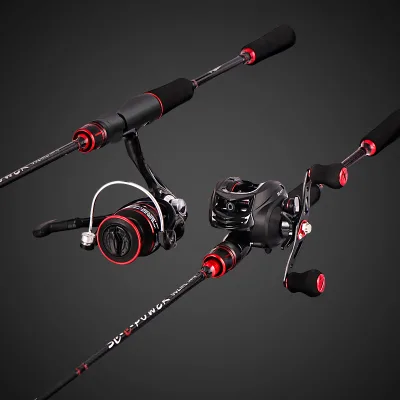
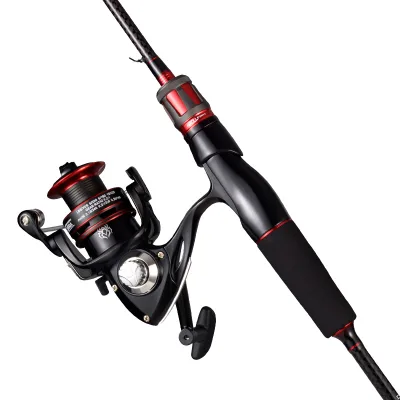

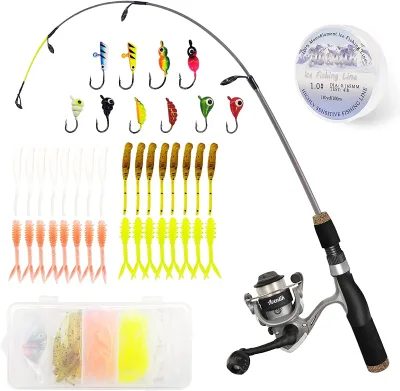


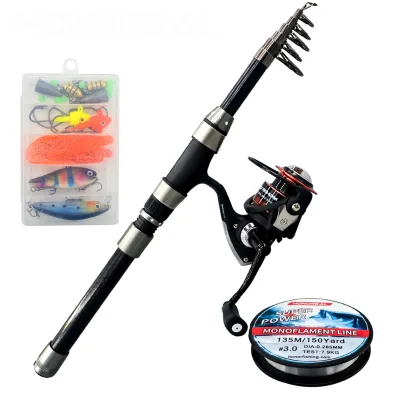
Comprehensive Sourcing Guide
Strategic Sourcing Guide for Telescopic Slow Action Fishing Rod and Reel Combos
Understanding the Technical Architecture of Telescopic Combos
When evaluating telescopic slow action fishing rod and reel combos, the primary focus must be on the mechanical integration of the rod and reel within a compact, collapsible form factor. The core advantage of this category lies in portability, achieved through a telescopic design that collapses the rod to a manageable length for transport. Based on observed market data, these units frequently feature a collapsed length of approximately 0.9 meters, while extending to operational lengths ranging from 1.8 meters to 2.4 meters. This variability suggests that buyers must verify the specific extended length against their intended fishing environment, as a 2.4-meter rod offers greater casting distance compared to a 1.8-meter unit.
The action of the rod is a critical technical specification. In the context of "slow action," the rod bends deeply into the lower section when pressure is applied, providing a soft feel that is ideal for delicate presentations. However, the supplied product data indicates a mix of action ratings, including "M" (Medium) and "S" (Slow), alongside "F" (Fast) variations in other listings. A buyer seeking a true slow-action rod must specifically verify the action rating in the product specification sheet, as the term "slow action" is not universally applied to all telescopic models. The power rating, which indicates the rod's lifting strength, is observed to range from "Medium" to "Heavy." A heavy-power telescopic rod with a slow action is a specific configuration often used for larger lures, while medium-power models are generally suited for lighter tackle.
The material composition is another decisive factor. High-performance telescopic rods in this category are frequently constructed from carbon fiber, which offers a high strength-to-weight ratio. The handle material is typically EVA (Ethylene-Vinyl Acetate), chosen for its durability, water resistance, and comfortable grip in wet conditions. The reel component is often paired with an aluminum spool, which provides structural integrity and reduces weight compared to plastic alternatives. The number of sections in the telescopic mechanism varies, with some models featuring two sections and others up to four, directly impacting the collapsed length and the complexity of the extension mechanism.
Compliance and Certification Verification Protocols
In the B2B procurement of fishing equipment, compliance with international safety and quality standards is non-negotiable. While specific test data for every unit is not always publicly listed, buyers must demand evidence of certification for the products they intend to import. The market data indicates that CE certification is a common attribute for products originating from China. The CE mark signifies that the product meets EU safety, health, and environmental protection requirements. For buyers targeting European markets, verifying the validity of the CE certificate and ensuring it covers the specific model number (such as AM-07 or AM-03) is essential.
Beyond the CE mark, buyers should investigate whether the product adheres to other relevant standards. The provided data mentions a product standard dimension of 55x20x10 cm, which likely refers to the packaging dimensions rather than a manufacturing standard. However, the existence of a defined standard implies that the manufacturer follows a specific production protocol. Buyers should request the specific ISO standards or industry-specific testing reports that the supplier claims to follow. For instance, if the rod is marketed for outdoor use, it should be tested for resistance to UV degradation and saltwater corrosion.
The "Quality Assurance" attribute listed as "One Year Warranty" or "Strict Q/C Control" serves as a contractual indicator of the supplier's confidence in their product. However, a warranty is only as good as the supplier's ability to honor it. Buyers must verify the terms of the warranty, including what constitutes a defect versus normal wear and tear, and the process for claiming repairs or replacements. The presence of OEM (Original Equipment Manufacturer) and ODM (Original Design Manufacturer) capabilities suggests that the supplier can customize these compliance features, but the baseline certification must be established before customization begins.
Cost Drivers and Pricing Structure Analysis
The pricing of telescopic fishing rod and reel combos is influenced by a complex interplay of material costs, manufacturing complexity, and order volume. The observed price range in the market spans from $1.60 to $50.99 USD, a significant variance that reflects differences in quality, materials, and included accessories. The lower end of this spectrum typically corresponds to entry-level models with basic carbon construction and standard reel components. The higher end often includes premium materials, such as high-modulus carbon, advanced reel bearings, and superior finishing.
A primary cost driver is the material composition. Carbon fiber is significantly more expensive than fiberglass or composite blends. Products explicitly listing "Carbon" as the material will command a higher price point than those using mixed materials. Similarly, the reel spool material impacts cost; aluminum spools are generally more expensive than plastic or composite spools but offer better performance and durability. The "Heavy" power rating often correlates with the use of thicker, more expensive carbon blanks, further driving up the unit cost.
Order volume is another critical factor in the final landed cost. The Minimum Order Quantity (MOQ) is observed to range from 1 to 1000 units, with a common threshold of 500 units for customized orders. Buyers ordering near the MOQ of 500 pieces will typically secure a lower per-unit price compared to those ordering smaller quantities. The "Sample" attribute noting "Double Price" indicates that sample units are often charged at a premium, which is standard practice in the industry to cover the higher cost of small-batch production.
Shipping and logistics also contribute to the total cost. The "Ships From: China" attribute confirms the origin, and the "Product Packing" listed as "Sea Freight" suggests that for large orders, sea freight is the preferred method to reduce costs. However, the weight of the product, observed at 152 grams for specific models, must be factored into the shipping calculation, especially if the order quantity is high. Buyers should request a detailed breakdown of costs, including the unit price, tooling fees (if applicable for customization), and shipping terms (FOB, CIF, etc.), to accurately assess the total cost of ownership.
Typical Applications and Performance Expectations
The application of telescopic slow action fishing rod and reel combos is diverse, catering to various fishing environments and techniques. The "Usage: Outdoor" attribute confirms their suitability for general recreational and professional fishing. Specific locations mentioned in the data include "Lake" and "Stream," indicating that these rods are versatile enough for both still water and flowing water environments. The "Lure Weight" range of 10-40g suggests that these rods are optimized for casting medium-sized lures, making them suitable for targeting species like bass, pike, or trout.
The "Slow Action" characteristic is particularly beneficial for techniques requiring a soft hook set or for fishing with live bait. The deep bend of the rod absorbs the shock of a striking fish, reducing the risk of tearing the hook out of the fish's mouth. This makes the combo ideal for anglers who prefer a more tactile fishing experience or those fishing in areas with heavy cover where a fast action rod might snap the line. The "Medium" and "Heavy" power ratings allow for the handling of larger lures and stronger fish, expanding the range of potential targets.
The telescopic design offers a distinct advantage for travelers and anglers with limited storage space. A collapsed length of 0.9 meters allows the rod to fit into a backpack or a small vehicle trunk, making it an excellent choice for camping, hiking, or urban fishing where transport is a constraint. The "Package: Cloth Bag" attribute further supports portability, providing a protective and lightweight storage solution. However, buyers should be aware that the telescopic mechanism, while convenient, may introduce slight flex points that could affect the overall sensitivity compared to a one-piece rod.
Supplier Evaluation and Customization Capabilities
Selecting the right supplier for telescopic fishing rod and reel combos requires a thorough evaluation of their capabilities, particularly regarding customization and quality control. The data indicates that "Customization: Available" and "Customized: Customized" are key attributes, meaning suppliers are willing to tailor products to specific buyer requirements. This includes "Logo Print: Full Color" and "Imprint: Logo Sticker," allowing buyers to brand the products for their own retail channels. The "Design: Can OEM, ODM" capability confirms that suppliers can not only apply logos but also modify the design, materials, and specifications of the rod and reel.
When evaluating suppliers, buyers should prioritize those with a proven track record of "Strict Q/C Control." This implies a systematic approach to quality assurance throughout the manufacturing process. The "One Year Warranty" is a strong indicator of a supplier's commitment to product longevity, but it should be backed by a clear, written policy. Buyers should also verify the "Quality Assurance" claims by requesting references or case studies from other clients.
The "OEM: Yes" attribute suggests that the supplier is experienced in working with external brands. This is crucial for buyers who want to create a unique product line. However, customization often comes with higher MOQs. The observed MOQ of 500 units for customized orders is a standard threshold that buyers must be prepared to meet. For buyers with lower volume needs, the option to order standard models with a minimum of 1 unit may be available, though the per-unit cost will be higher.
Quality Control and Long-Term Procurement Considerations
Ensuring consistent quality in telescopic fishing rod and reel combos requires a robust quality control (QC) strategy. The "One Year Warranty" and "Strict Q/C Control" attributes highlight the importance of pre-shipment inspections. Buyers should implement a QC protocol that includes checking the telescopic sections for smooth extension and retraction, verifying the reel's drag system, and inspecting the rod guides for alignment and smoothness. The "Fishing Rod Guide: Stainless Steel" attribute indicates a specific material choice that should be verified for corrosion resistance, especially for saltwater applications.
Long-term procurement considerations involve building a sustainable relationship with the supplier. The "Ships From: China" attribute and the "Sea Freight" packing method suggest that logistics planning is a critical component of the supply chain. Buyers should establish clear communication channels for order tracking and lead time management. The "Sample: Double Price" policy indicates that sample orders are a necessary step in the evaluation process, and buyers should factor the cost of samples into their initial budget.
Furthermore, buyers should consider the scalability of the supplier. As demand grows, the supplier must be able to maintain quality and meet increased order volumes. The "MOQ: 500PCS" constraint suggests that the supplier is geared towards medium-to-large volume orders. For buyers planning to scale, negotiating volume discounts and securing a dedicated production line may be necessary. The "Product Name: 2.4m Telescopic Fishing Rod and Reel Combos Full K" example shows that specific model naming conventions are used, and buyers should ensure that these names are consistent across all orders to avoid confusion in inventory management.
Summary of Key Specifications and Comparison
To facilitate a clear comparison of the telescopic fishing rod and reel combos available in the market, the following table summarizes the key technical specifications and attributes observed in the product data. This comparison highlights the variability in dimensions, materials, and performance characteristics that buyers must consider.
| Specification | Model AM-07 | Model AM-03 | Baitcasting Rods 041 | General Range |
|---|---|---|---|---|
| Length (cm) | 210 | 180 | 240 | 180 - 240 |
| Collapsed Length | N/A | 0.9m | N/A | ~0.9m |
| Material | Carbon | Carbon | Carbon | Carbon |
| Handle Material | N/A | EVA | N/A | EVA |
| Action | M | F | S | M, F, S |
| Power | Medium | N/A | Heavy | Medium, Heavy |
| Reel Spool | N/A | N/A | Alu | Alu, Plastic |
| Reel Size | N/A | N/A | 3000 | 3000+ |
| Sections | N/A | 2 | 4 | 2 - 4 |
| Lure Weight | 10-40g | 10-40g | 10-40g | 10-40g |
| Certification | CE | CE | CE | CE |
| Warranty | One Year | One Year | One Year | One Year |
| MOQ | 500 | 500 | 500 | 1 - 1000 |
| Origin | China | China | China | China |
This table underscores the importance of verifying specific model numbers against the buyer's requirements. While the general attributes like material and certification are consistent, the specific dimensions, action, and power ratings vary significantly. Buyers must carefully match these specifications to their intended fishing style and target species to ensure optimal performance. By adhering to the technical, compliance, and quality standards outlined in this guide, buyers can make informed decisions when sourcing telescopic slow action fishing rod and reel combos.
FAQs
What is the typical collapsed length of these rods?
The typical collapsed length is 0.9 meters, allowing for compact transport. This dimension enables the rod to fit into backpacks or small vehicle trunks while extending to operational lengths of 1.8 to 2.4 meters for actual fishing.
Which certifications are commonly available for these products?
CE certification is a common attribute for products originating from China. Buyers targeting European markets should verify the validity of this certificate and ensure it covers the specific model number before placing large orders.
Can buyers customize the logo and design of the rod?
Yes, customization is available with options for full color logo printing and logo stickers. Suppliers also offer OEM and ODM design capabilities, allowing buyers to tailor specifications and branding to their specific retail requirements.
What is the minimum order quantity for customized orders?
The minimum order quantity for customized orders is typically 500 units. Buyers ordering near this threshold will secure lower per-unit prices, while sample units are often charged at double the standard price to cover small-batch costs.
How does the rod action affect fishing performance?
Slow action rods bend deeply into the lower section, providing a soft feel ideal for delicate presentations. This configuration absorbs shock effectively, reducing the risk of tearing the hook out of the fish's mouth during strikes.
What materials are used for the rod blank and handle?
The rod blank is frequently constructed from carbon fiber for a high strength-to-weight ratio. The handle material is typically EVA, chosen for its durability, water resistance, and comfortable grip in wet outdoor conditions.
What is the warranty period for these fishing combos?
A one-year warranty is a standard quality assurance feature for these products. Buyers should verify the specific terms regarding defects versus normal wear and tear to understand the scope of repair or replacement coverage.